Normal, comfortable clothes are completely fine. The only thing that really matters is your shoes, and even that is simpler than you’d expect.
If you’ve been putting off booking because you’re not sure what to wear to a dance class, you’re in very good company. Almost nothing written in Britain about a first dance class outfit is any use, and the one question that genuinely matters, what shoes for ballroom dancing, tends to get skipped altogether.
Here’s the short version. Wear what you’d wear to meet a friend for coffee, as long as you can move in it. Have shoes with a smooth sole. Everything below is detail for anyone who wants it.
Nobody turns up in sequins
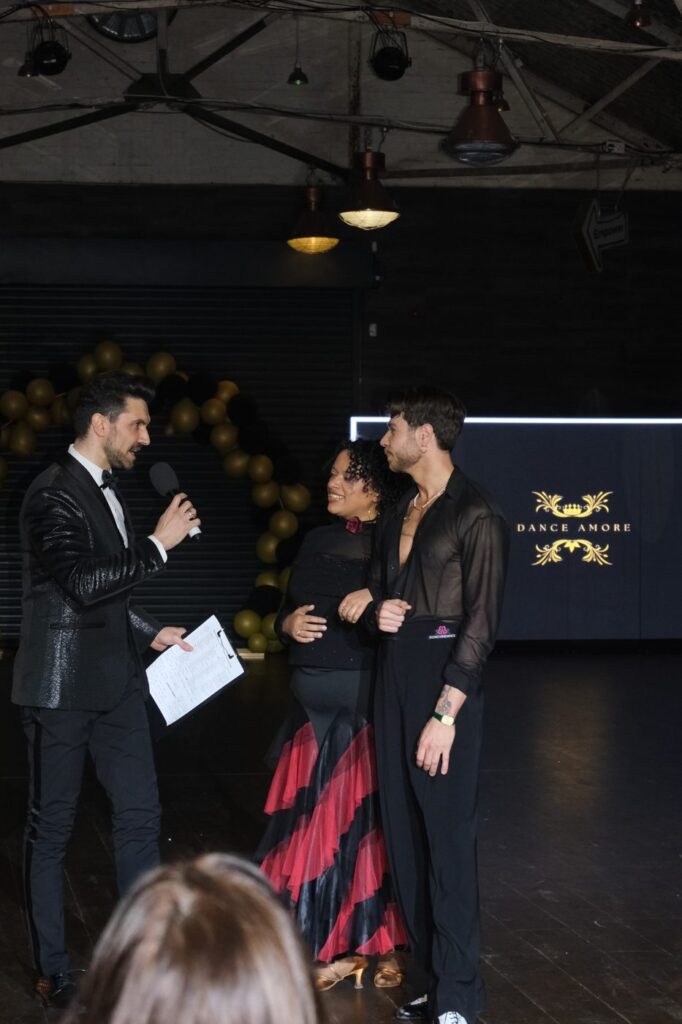
The picture in your head, the fringed dress and the ballroom lights, comes from television. It isn’t what a Wednesday evening lesson in Paddington looks like. Costume of that kind sits at the far end of a very long road, and plenty of people dance beautifully for years without ever going near it.
What you actually see is ordinary clothes. Leggings and a vest top. Soft trousers and a T-shirt. A shirt with the sleeves rolled up because someone has come from the office.
Because every lesson here is one to one with a professional instructor, there’s no room full of strangers to worry about either. It’s you, your teacher and the floor.
What to wear to a dance class
Three things matter, and none of them are about how you look.
You need to be able to move. Raise your arms above your head in whatever you’re considering. If the shoulders pull or the waistband rides up, wear something else. Ballroom and Latin both ask you to lift your arms and hold them there for longer than you think.
You need to be able to warm up. You’ll get hotter than you expect, fairly quickly, even in a first lesson spent mostly walking through steps. That happens to everyone. Dress in layers so you can lose one ten minutes in.
You need to stop adjusting things. Anything you keep pulling down, tucking in or holding up will take your attention straight off your feet, and your feet are where you want it. That’s the real test, not the style.
A few things worth avoiding:
- Stiff jeans. Soft, stretchy denim is fine, but rigid denim fights your legs.
- Long, loose trousers you might tread on, particularly if you usually wear them with a heel and will be dancing flat.
- Necklaces, bangles and long earrings. Arms and hands pass close to one another, and jewellery catches.
- Anything strapless or forever slipping, for the same reason.
What shoes for ballroom dancing, and why the sole matters most
This is the part beginners get wrong, so it’s worth reading twice.
Forget the style of the shoe. What matters is the sole. Ballroom and Latin are built on turning, and to turn, your foot has to pivot on the floor. A grippy rubber sole won’t allow it. Your foot stays where it is while the rest of you keeps going, and that’s how people tweak a knee or an ankle in their first few lessons.
So the shoes to leave at home are trainers. It feels backwards, because trainers are what most of us reach for the moment we hear we’ll be moving around. But grip is the entire point of a trainer, and grip is exactly what you don’t want. If they’re all you own, come anyway, and your instructor will keep the pace safe. They’re just the first thing to swap.
Anything with a smooth sole works. Ordinary leather-soled shoes are genuinely fine to begin with, so smart work shoes, loafers, a leather-soled boot or a plain court shoe will all do the job. A lot of people take their first lessons in the very shoes they wore to the office. Thin ballet-style flats work too, though they give your foot almost no support.
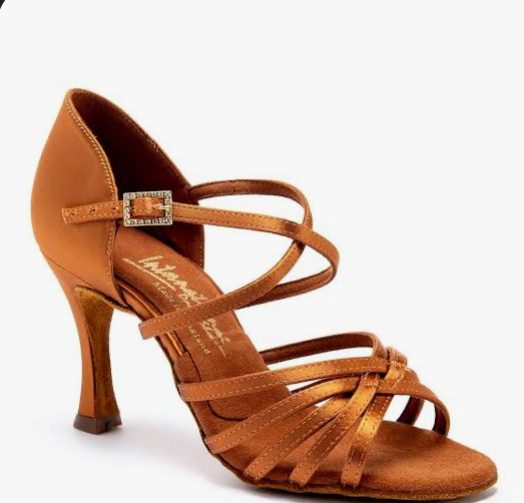
You don’t need heels. Not at the start, and not later either if you’d rather not. Plenty of people dance socially in flats for years and dance well. If you do want a heel, low and secure beats high and loose every single time. A modest heel with a strap across the foot will teach you far more than a high, backless one you have to grip with your toes, and a shoe that could come off mid-turn is a shoe you’ll dance cautiously in.
Proper dance shoes, the ones with suede soles, are lovely, and there will come a point where they’re worth buying. That point is after you know you’re staying. Suede grips just enough to stop you sliding and releases just enough to let you turn, but it’s a purchase for a hobby you’ve already decided to keep. Find out first whether you’re drawn to Waltz, Tango, Cha Cha or Salsa, then buy shoes. Simone or Martynas will tell you what to look for when you get there.
One practical point. Most studios, including this one, simply ask that you bring clean indoor shoes rather than dancing in whatever you walked in on. Wooden floors don’t forgive London grit, and a second pair in a bag is completely normal.
Coming straight from work
The studio is a three minute walk from Paddington station, and we’re open from 10am until 10pm, Monday to Saturday. There’s no parking nearby, so almost everybody arrives by tube, often with a work bag over one shoulder. That’s exactly how it should be. You don’t need to go home and change first.
A small bag covers everything you need: your indoor shoes, a spare top, a hair band, a bottle of water and a small towel. Most people lose the jacket, swap the shoes and start. Suit trousers and a shirt are perfectly good dancing clothes, and so is a work dress you can lift your arms in.
The long hours also mean you can come before work or at lunchtime instead, which some people find far easier than an evening slot after a long day. Have a look at how lessons and programmes work, then pick the time that fits your week.
Hair, fragrance and the small things
Get your hair off your face. Turning is much harder when you can’t see, and long hair that swings will end up in somebody’s mouth eventually, quite possibly your own. A band or a clip is plenty.
Go light on fragrance, or skip it. Partner dancing puts you close to another person for a full hour, and something that smells lovely at a metre can be a lot at thirty centimetres. Bring water, which almost everyone underestimates for a first lesson, and a small towel if you tend to warm up quickly.
If you’re learning a wedding first dance
Wedding lessons are the one real exception to all of this.
For the first few lessons, dress as you would for any other class. At some point before the day, though, practise in shoes like the ones you’ll actually be wearing. New wedding shoes behave differently from anything already in your wardrobe, especially if the heel is higher than you’re used to or the sole is slippery, and the morning of the wedding is a poor time to discover it.
The same goes for a long dress. A skirt of a similar length teaches you where the fabric goes and how much room you need, and that alone heads off most of the trouble couples run into. Our wedding dance lessons build this in, so just tell us what you’re planning to wear.
Frequently asked questions
Do I need dance shoes for my first class?
No. Any smooth-soled shoe you already own will do. Buy proper suede-soled dance shoes later, once you know you’re going to carry on.
Can I wear trainers?
Trainers are the one thing we’d steer you away from. They grip the floor, which stops your foot turning when your body does, and that’s how knees get twisted. If they’re all you have, come anyway and we’ll work at a safe pace, then bring something smooth-soled next time.
Do women have to wear heels?
Not at all, at any stage. Flats are completely fine. If you’d like a heel, choose a low one with a strap rather than a high one that slips.
What if I turn up in the wrong thing?
You’ll still have a good lesson. None of this is a rule and nobody is checking. Almost everything can be worked around, and shoes are the only thing your instructor would ever mention. There are more answers on our FAQ page if something else is on your mind.
Come and try it
You can dance here in clothes you already own, and you don’t need a partner, because you’ll be dancing one to one with a professional. Nothing to buy, no outfit to plan, nothing to organise beyond putting smooth-soled shoes in a bag. Get in touch to book an introductory lesson and consultation, and we’ll take it from there.