Almost every list of easy first dance songs online was written by a musician, a wedding band or a booking agency, and none of them answer the question that matters on the floor: can you dance to it, and how long will it take to learn? This list is written by dancers, and every song below is judged on whether two people with no experience can look good to it in six weeks. If you have been hunting for easy first dance songs UK couples genuinely use, or songs that are easy to dance to rather than lovely to listen to, you are in the right place.
Six weeks is a comfortable run at it, and with a lesson a week and a little practice in between it is plenty. The song you pick affects the result more than your natural rhythm does. Our wedding dance lessons in London start with this conversation, because getting the song right saves you weeks.
What makes a song easy or hard to dance to
Three things decide it, and none of them need any musical training.
1. How the song counts: threes or fours
Music groups its pulse into threes or into fours. Threes suit a waltz and very little else. Fours suit almost everything else.
Here is how to tell, without any theory. Put the song on, tap along with the strongest beat, the one you would nod your head to, and count out loud as you tap: “one, two, three, one, two, three”. If your “one” keeps landing on a beat that feels heavier than the two after it, the song is in threes. If it slides out of place, count “one, two, three, four” instead. One of the two locks in within fifteen seconds. Songs in threes are what teachers call 3/4 or 6/8 time, though you never need the label.
2. Tempo, and why very slow is not the easy option
A comfortable tempo is one you could walk to at a relaxed pace, without rushing and without standing still between steps. Slower is kinder, but only to a point. When a song is really slow, each step lasts a long time and you have to fill it. Beginners run out of movement, arrive early, then wait for the music. Waiting is what looks awkward, not moving. Stuck between two songs you like equally? Take the quicker one.
3. Structure, or whether the song behaves itself
The easiest songs are predictable: a clear drum or bass line all the way through, verses and choruses that keep the same shape, no surprises.
What makes a song difficult is drift. A long opening where the singer floats in free time with nothing to count against. A section where the band drops out. A tempo that creeps up. A key change that turns the last minute into a different song.
The test is simple. Walk around your kitchen in time with the song, first second to last. If you manage that without stopping, you can dance to it.
Songs that suit a slow waltz
The waltz is the kindest dance for beginners. The count is only three, the movement never stops, and there is no gap to fill.
- Perfect, Ed Sheeran. Steady throughout, no traps. The most requested first dance in the country, and it earns that.
- Can’t Help Falling in Love, Elvis Presley. Gentle, short and entirely predictable.
- Have I Told You Lately, Van Morrison or Rod Stewart. A lilting three feel with an unmissable pulse.
- Kiss From a Rose, Seal. Distinctive, and the beat is firm once it settles.
- Moon River, Andy Williams. A proper waltz, short, and the phrasing almost choreographs itself.
Songs that suit a rumba
Rumba is the answer for most slow songs in fours. You dance it on the spot rather than travelling, it works in a close hold, and it reads as intimate.
- Thinking Out Loud, Ed Sheeran. Steady, medium slow, completely reliable.
- Careless Whisper, George Michael. The rhythm is clear enough to hear where every step belongs.
- Wonderful Tonight, Eric Clapton. Slow, but with an obvious beat underneath, the combination you want.
- Have You Ever Really Loved a Woman, Bryan Adams. Quicker, with a Latin feel to lean into.
- At Last, Etta James. Slow and grand, and it rewards confidence.
Cha cha suits anything with a cheekier bounce: Sway by Michael Bublé, Smooth by Santana.
Songs that suit a foxtrot
Foxtrot travels around the floor with an easy strolling quality and suits anything with a swing in it, which covers most of the crooner repertoire. The dressed up version, where you come apart and back together, is what most couples picture as a proper first dance.
- The Way You Look Tonight, Frank Sinatra. Medium tempo, rock steady, ends cleanly.
- Fly Me to the Moon, Frank Sinatra. A little quicker, very easy to hear.
- It Had to Be You, Harry Connick Jr. Warm, unhurried and forgiving.
- L-O-V-E, Nat King Cole. Bright, lively and short, and short is a genuine advantage.
- Beyond the Sea, Bobby Darin. Faster and good fun, if you are both feeling brave.
Songs with an upbeat swing or jive feel
If neither of you wants a slow romantic dance, a jive or swing number is the way out. Quicker songs need more rehearsal, because there is less time to correct yourself, so keep the cut short.
- Crazy Little Thing Called Love, Queen
- Signed, Sealed, Delivered, Stevie Wonder
- Build Me Up Buttercup, The Foundations
- Valerie, Mark Ronson and Amy Winehouse
- Ain’t No Mountain High Enough, Marvin Gaye and Tammi Terrell
Opening slow and switching into one of these partway is popular, but that is two dances plus a transition, so allow ten weeks.
Songs to be careful with
None of these are bad songs. They simply cost you more time.
- Very slow ballads. Make You Feel My Love by Adele and Turning Page by Sleeping At Last are slower than they feel on the sofa. Long stretches to fill, nowhere to hide.
- Long free intros. Anything where the singer opens alone, out of time with the band, gives you nothing to start on. I Will Always Love You by Whitney Houston is the famous case, and its key change makes the second half a separate song.
- Tempo changes. Layla by Derek and the Dominos changes character halfway through, as does anything that begins as a ballad and becomes a rock record.
- Songs longer than you remember. A Thousand Years by Christina Perri, Purple Rain by Prince and November Rain by Guns N’ Roses all run past first dance length.
You can still use them. It usually just means a cleverer cut.
Cut your song down to about two minutes
Nearly every couple should. A full length track played to a silent room of watching guests feels far longer than it does in your kitchen, and the last minute is where nerves and repeated steps show. Ninety seconds to two minutes reads as a complete dance and ends while everyone is still smiling.
Keep an intro you can start on, one verse, one chorus and an ending that stops rather than fades. Any decent audio editor handles it in ten minutes. Avoid fading out at a random point, because then nobody knows when to clap.
Then rehearse to the exact file you will hear on the day and confirm it with your DJ in writing. Live versions run at different speeds, radio edits are shorter, covers are often much slower. Perfect alone exists as a solo recording, a duet and an orchestral version, all different lengths. If a band is playing live, agree the tempo beforehand.
Choose the song you love, not the easy one
Between now and the wedding you will hear your song several hundred times. In lessons, in the kitchen, in the car and in your sleep. Choose one purely because it is simple and you will be sick of it by week three, and that shows on the floor.
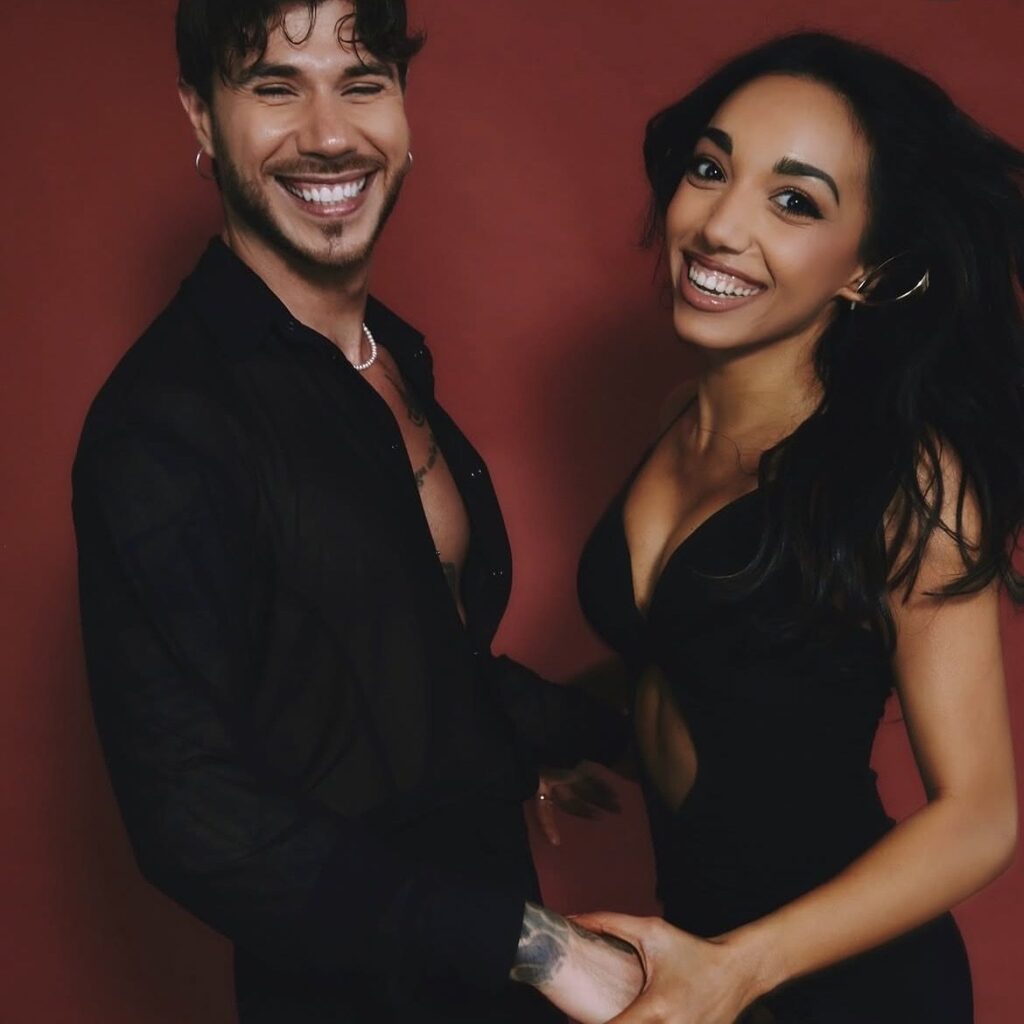
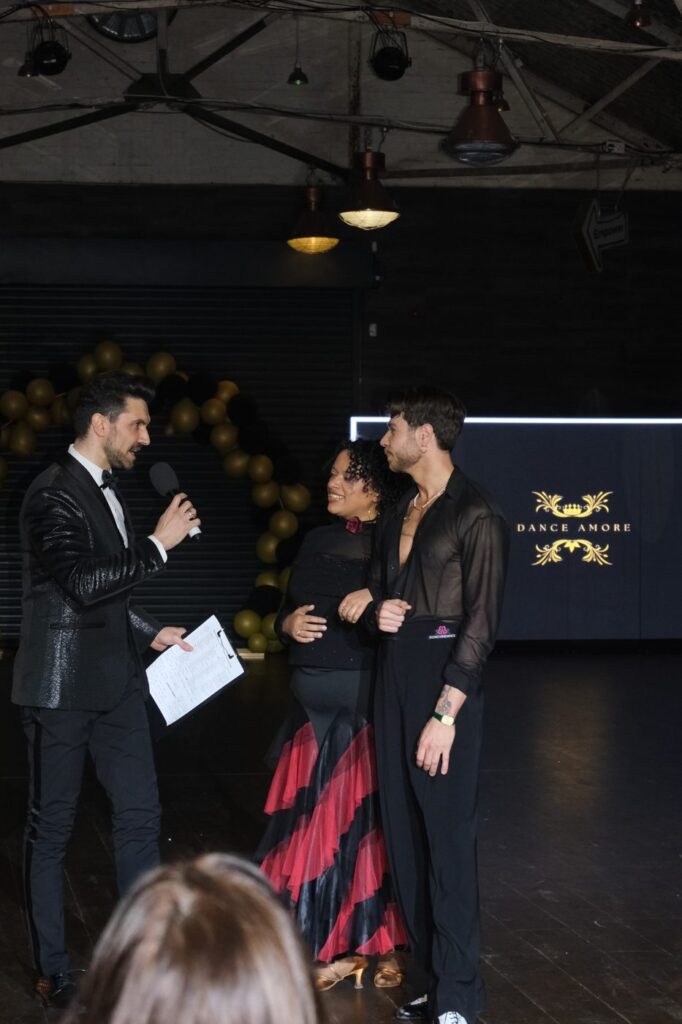
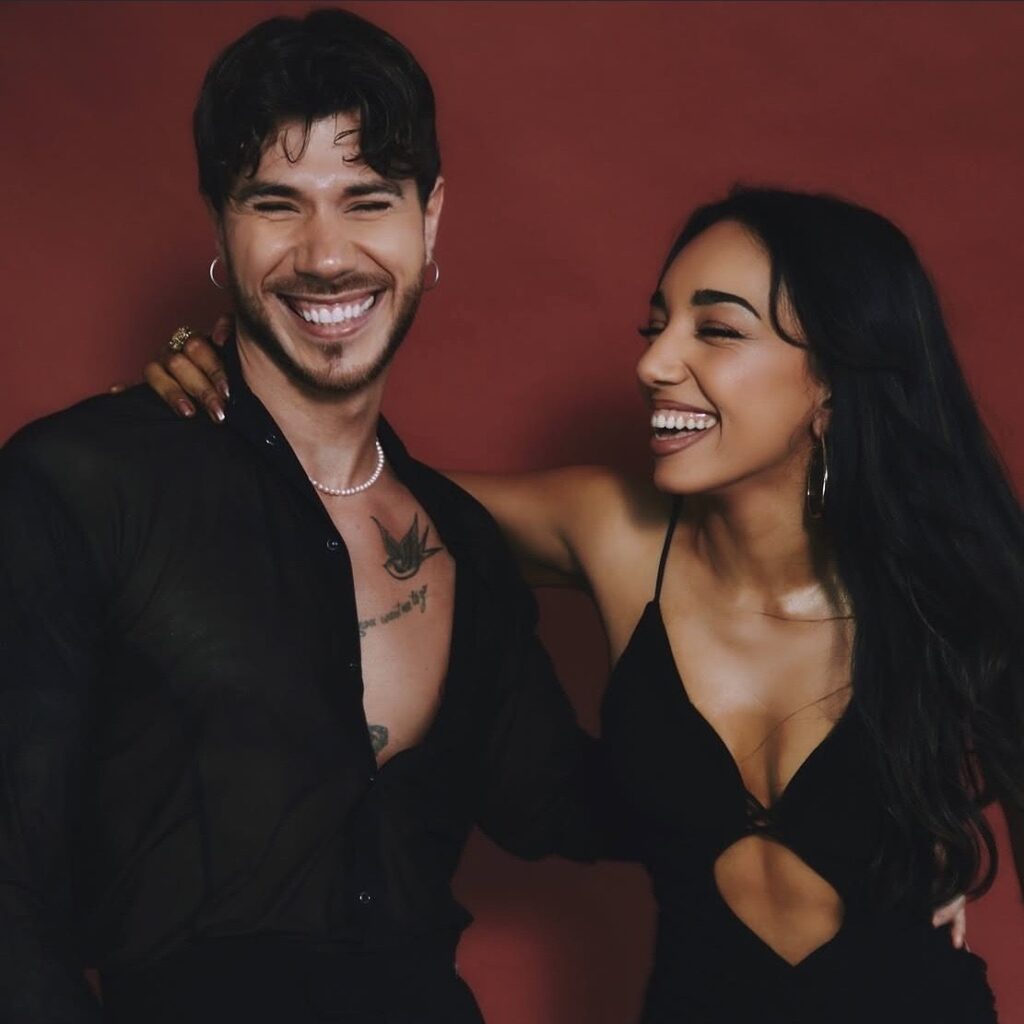
Pick something you both want to hear, then let a teacher tell you which dance suits it. Simone Arena founded the studio and choreographs first dances here personally: former Italian Ballroom and Latin Champion, winner of series three of Dancing with the Stars Belgium, finalist on Dancing with the Stars Ireland in 2024, and over ten years with Burn the Floor on Broadway. Martynas teaches first dance couples here too. The first thing either of them does is put your song on and count it, then build the choreography around what the music is doing. If your song is awkward we will say so, and the fix is normally the cut rather than the song.
Most first dances are built from waltz, rumba or foxtrot, though tango, cha cha and salsa turn up regularly, and you can see what the dance styles look like before deciding. We teach them as private one to one lessons, because your song, your floor and your nerves are your own. Everything else is listed here.
Frequently asked questions
How long should a first dance be?
Ninety seconds to two minutes. Most songs run three to five minutes, so cut yours. Guests enjoy a short, confident dance far more than a long one.
Can we dance to a song with no clear beat?
Yes, but it is harder. Without a steady pulse you cannot use timing to keep the two of you together, so the choreography follows the melody and you both have to memorise it precisely. Doable with a teacher, but not the six week option.
Can we really learn a first dance in six weeks?
Yes, for a straightforward song, with a lesson a week and ten minutes of practice at home in between. Most couples take somewhere between five and ten lessons in total. Allow three or four months for a lift or a tempo change.
What if one of us has never danced at all?
That is the normal starting point. Nearly every couple who walks in here arrives with no experience, and one of you being keener than the other is normal too.
Bring us your song
Bring the song you are considering, or three you cannot choose between, and we will count them and tell you honestly which is most learnable in the time you have. Book an intro lesson and consultation, and you will dance in it rather than talk about it.
You will find us at 1 Chilworth Mews, London W2 3RG, three minutes from Paddington station, open Monday to Saturday, 10am to 10pm. Call 07737 893113, text us on WhatsApp on 07480 387419, email danceamorestudio@gmail.com or use the contact page. There is more on the wedding dance lessons page, and do send your song over beforehand.