Everything you need to know about how to dance the cha cha cha for beginners lives in one small piece of rhythm: two, three, cha cha cha. Say it out loud a few times. That is the shape of the dance, and once your ear holds it, the cha cha basic steps stop being a list of instructions. Most people who struggle with cha cha for beginners are not struggling with their feet. Nobody explained the count to them properly.
What the Cha Cha Cha is
The Cha Cha Cha is one of the five International Latin dances, the group used in competition and taught in most studios (the others are Rumba, Samba, Paso Doble and Jive). It came out of 1950s Cuba and kept the cheek. The character is sharp, flirtatious and a little bit teasing.
For a beginner, the useful part is that it is danced mostly on the spot. You are not travelling around a room the way you would in a Waltz, worrying about where the wall is. You stay in a small area, facing your partner, trading steps back and forth. It is also the easiest Latin dance to hear.
The rhythm, which is the whole thing
Cha Cha Cha music is written in 4/4 time, which just means four beats to a bar, repeating. Count along to almost any pop or Latin track and you are counting 1, 2, 3, 4, 1, 2, 3, 4. The basic uses one bar and takes five steps in it:
2, 3, 4-and-1
Beginners usually learn it as “two, three, cha cha cha”, and that phrasing is worth keeping because it puts the sound of the dance in your mouth. The “cha cha cha” is those last three steps, 4, and, 1. Two of them are quick, squeezed into a single beat, and the third lands on the 1 of the next bar. That is why the dance never quite stops.
To hear it without any theory, put on a Cha Cha Cha track and find the heaviest beat, the one you would clap on. That is beat 1. Instead of starting there, wait for the next beat. Count 2, 3, then say “cha cha cha” quickly across the end of the bar.
Why the Cha Cha Cha starts on beat two
Your instinct is to start on beat 1, because beat 1 is the obvious one. But the basic ends on beat 1. That last “cha” is your arrival, not your departure. Start on 1 and you sit a beat ahead of the music all song, and everything feels slightly frantic without you knowing why. Think of beat 1 as the full stop at the end of a sentence rather than the capital letter at the start. You begin speaking on 2.
A practical way in: count a bar out loud and tap your foot on the 1 without stepping. Do that for four bars, then let one tap become the last “cha” of a basic you have just danced.
The cha cha basic steps, one at a time
The basic has two halves that mirror each other. One goes forward, one goes back, and both finish with a chasse.
A chasse is three small steps with the feet closing together in the middle: side, close, side. It is the “cha cha cha”. A rock step is the other component: you step onto one foot, then transfer your weight straight back onto the other, feet staying put.
Weight is what matters. On every count, your body weight moves fully onto one foot. If it stays split between both, nothing that follows works.
The leader’s part
Feet together, weight on your right foot.
- 2: step forward onto your left foot, small, weight arriving fully.
- 3: transfer your weight back onto your right foot, which has not moved.
- 4: step to the side onto your left foot.
- and: close your right foot to your left, taking the weight.
- 1: step to the side onto your left foot again.
The second half reverses it.
- 2: step back onto your right foot.
- 3: transfer your weight forward onto your left foot.
- 4: step to the side onto your right foot.
- and: close your left foot to your right.
- 1: step to the side onto your right foot.
You are back where you started.
The follower’s part
Everything is the opposite, which is what lets the two of you move in the same direction at the same time. Feet together, weight on your left foot.
- 2: step back onto your right foot.
- 3: transfer your weight forward onto your left foot.
- 4: step to the side onto your right foot.
- and: close your left foot to your right.
- 1: step to the side onto your right foot.
Then the second half.
- 2: step forward onto your left foot.
- 3: transfer your weight back onto your right foot.
- 4: step to the side onto your left foot.
- and: close your right foot to your left.
- 1: step to the side onto your left foot.
Read your own part out loud, standing up. Reading both at once is how people get tangled.
The three things beginners get wrong
Rushing the cha cha cha. The three quick steps are quick, but they are not a scramble. Beginners fire the feet off as fast as they can, which turns a crisp figure into a shuffle and leaves you waiting awkwardly for the next 2. The 4 and the “and” share one beat. The final “cha” gets a whole beat.
Steps that are far too big. This is a compact dance. A side step is roughly shoulder width, often less. Big steps drag your weight behind you, so you arrive late, so you rush the next thing, and the bar collapses. If your basic is drifting across the floor, your steps are too long.
Never straightening the leg. Here is the honest version of hip action, because it gets mystified constantly. The hips are not something you do on purpose. When you transfer your weight onto a foot and let that leg straighten underneath you, the hip on that side settles and moves. That is all it is, a consequence of the weight change, not a decoration added on top. Beginners who wiggle deliberately move the top of the body and lose the rhythm. Straighten the supporting leg, put your weight on it, and the hip does its own work.
Two figures beyond the basic
A first lesson usually adds one or two simple figures once the basic is stable. The New York has you turn to face the same direction as your partner, step through side by side, then come back. It uses the same 2, 3, 4-and-1 count, which is the point of teaching it early. The spot turn turns you on the spot across counts 2 and 3, finished with the usual chasse. It looks far more impressive than it is, and it tends to be the first figure that makes people feel like they are dancing.
Both, and the rest of the Latin syllabus, sit inside the range of styles taught at the studio.
Music to practise to
Cha Cha Cha sits at roughly 120 to 128 beats per minute, about 30 to 32 bars a minute, bright and bouncy without being a sprint. Three tracks that work well at home: “Smooth” by Santana featuring Rob Thomas, “Oye Como Va” by Tito Puente, and “Sway” by Michael Bublé. Play one, find beat 1, wait a beat, start counting.
Frequently asked questions
Why does the Cha Cha Cha start on two?
Because the basic ends on beat 1. The three quick steps run across counts 4, and, 1, so beat 1 is the figure’s last step rather than its first. Starting on 1 puts you a beat ahead all song.
Do I need a partner to learn it?
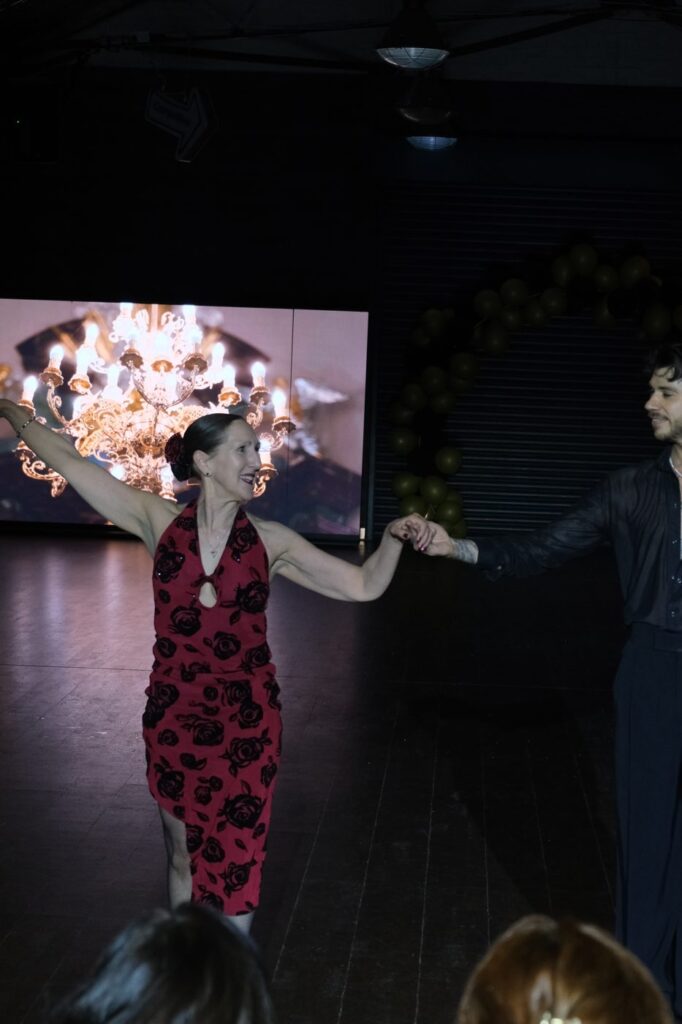
No. Dance Amore Studio runs on a pro-am format, which means you dance one to one with a professional instructor rather than another student. You will never be sat out or paired with someone at a different level. See how the lessons are structured before you come in.
How long before I can dance a full song?
Most people hold the basic in time to music within a lesson or two. A whole track with a few figures in it, without counting out loud, takes a handful of lessons. Practice between lessons matters far more than natural ability.
Is the Cha Cha Cha a good first dance to learn?
It is one of the best. The rhythm is audible, you stay on the spot, and the basic transfers into Rumba and Salsa later. Plenty of people meet it through wedding first dance lessons and stay for the Latin syllabus.
Come and try it
Rhythm is learnable. Nobody is born counting in 4/4, and the people who look effortless on a floor were once standing still working out where beat 2 was.
What a page cannot do is watch your weight land in the wrong place and tell you in the half second before your next step. That correction, given in real time by someone standing in front of you, is why one lesson usually moves you further than a fortnight alone in the kitchen.
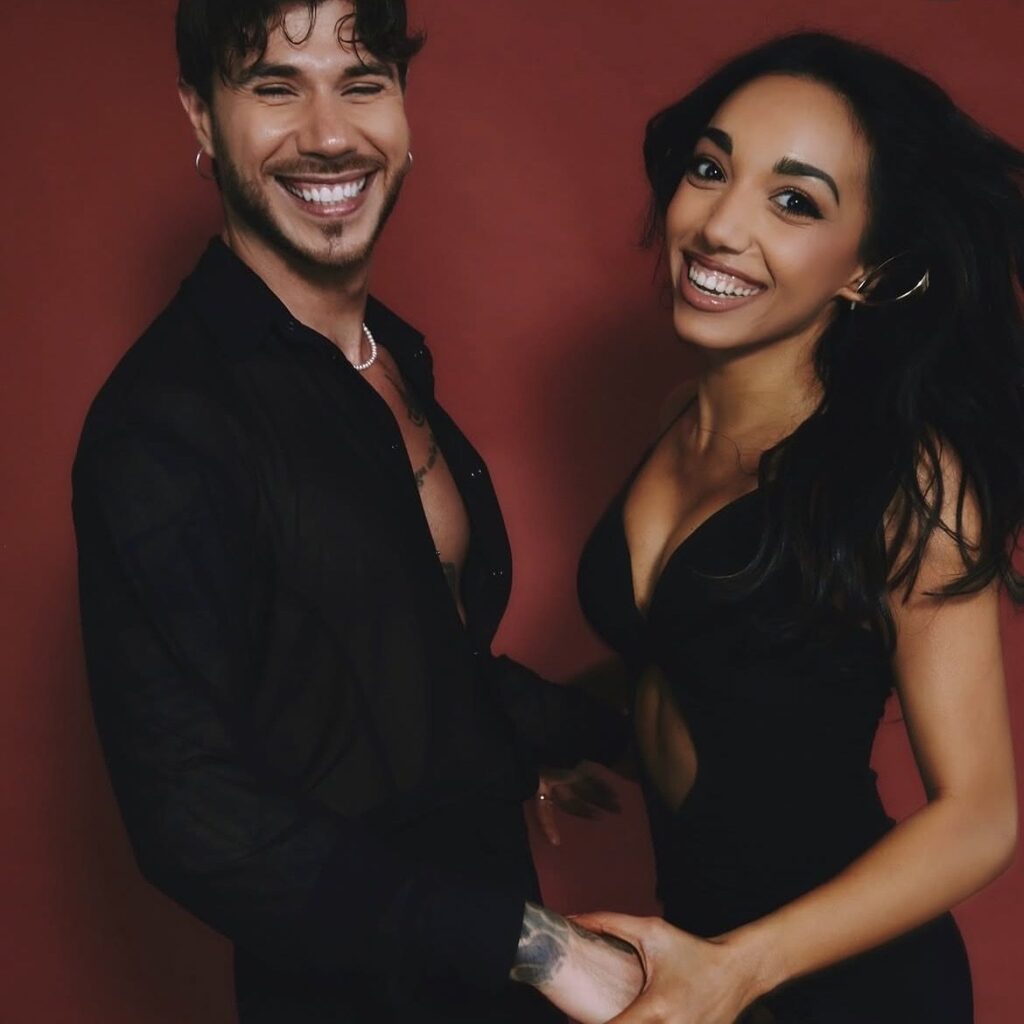
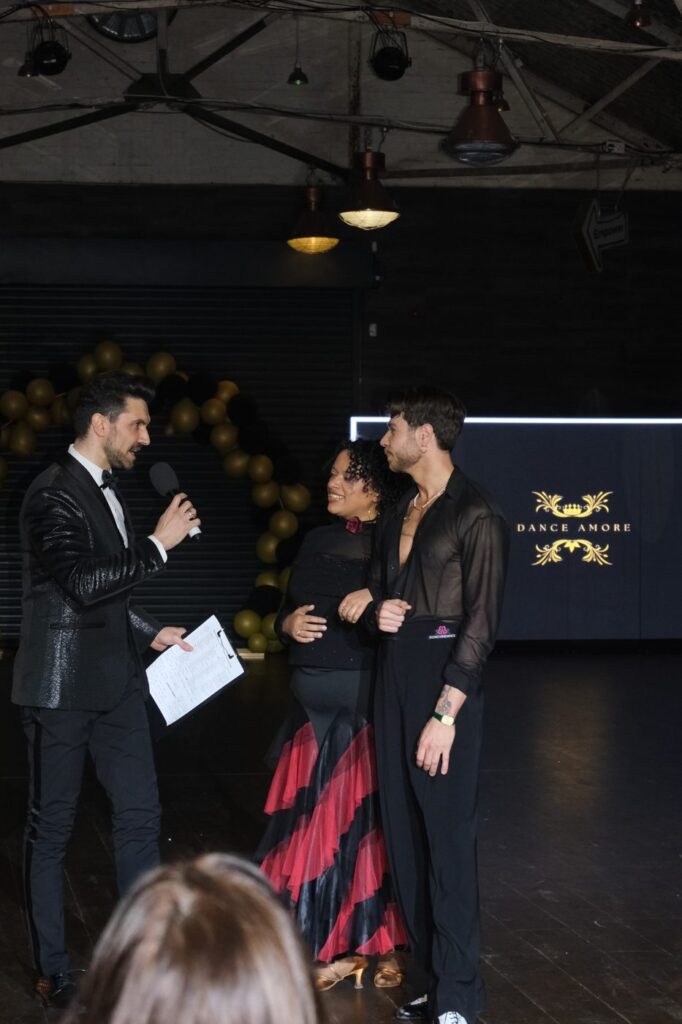
Dance Amore Studio is at 1 Chilworth Mews, London W2 3RG, three minutes from Paddington station, open Monday to Saturday, 10am to 10pm. It was founded by Simone Arena, former Italian Ballroom and Latin Champion, winner of Dancing with the Stars Belgium series three and a finalist on Dancing with the Stars Ireland in 2024, with over ten years in the Burn the Floor Broadway production. He teaches alongside instructor Martynas.
Book an intro lesson and consultation and we will work out what suits you. Call 07737 893113, WhatsApp 07480 387419 (text only), email danceamorestudio@gmail.com, or use the contact page. The FAQ page covers the practical questions first timers ask.