Your first Pro-Am competition is one of the most exciting things you can do as an adult dancer. You walk onto the floor with your professional, the music starts, and for ninety seconds everything you’ve practised is yours to show. It is also far less frightening than people imagine.
This guide explains how a Pro-Am competition works, how to prepare, and what the day itself feels like. If you’re new to the idea altogether, start with our guide to what Pro-Am dancing is.
How a Pro-Am competition works
In a Pro-Am event, an amateur dances with a professional as their partner. Only the amateur is judged. Your professional is there to partner you well and help you look your best.
You don’t dance against the whole room. Events are divided so that you compete with people like you:
By level. Most competitions use levels such as Bronze, Silver and Gold, so a beginner is never up against someone with ten years behind them.
By age group. Entries are usually split into age bands, and many competitions have groups running well past seventy.
By style. Ballroom and Latin are separate, and some events also offer American Smooth, American Rhythm and Argentine Tango.
By dance. You can enter single dances, such as a Waltz or a Cha Cha Cha on its own, or multi-dance events where your marks across several dances are combined.
For a first competition, most people enter a handful of single dances in one style. It gives you several turns on the floor without too much to remember.
Am I ready?
If you can dance a simple routine to music without stopping, you’re closer than you think. You don’t need to be advanced, and you don’t need years of lessons. Bronze level exists for exactly this reason.
The better question is whether you’d enjoy it. If the thought gives you butterflies of the good kind, that’s usually your answer. Your professional will tell you honestly when the time is right.
Preparing with your professional
Preparation normally starts a couple of months ahead. Together you will:
- Choose the event, the style and the dances.
- Build routines that suit your level and show you at your best.
- Practise them until they feel comfortable, then practise them some more.
- Run through “rounds”, dancing each routine back to back as you will on the day.
- Work on floorcraft, which is the art of moving around other couples without losing your place.
In the last few weeks, students often add an extra lesson or two. Nothing new goes in at that stage. It’s all about confidence.
What to wear
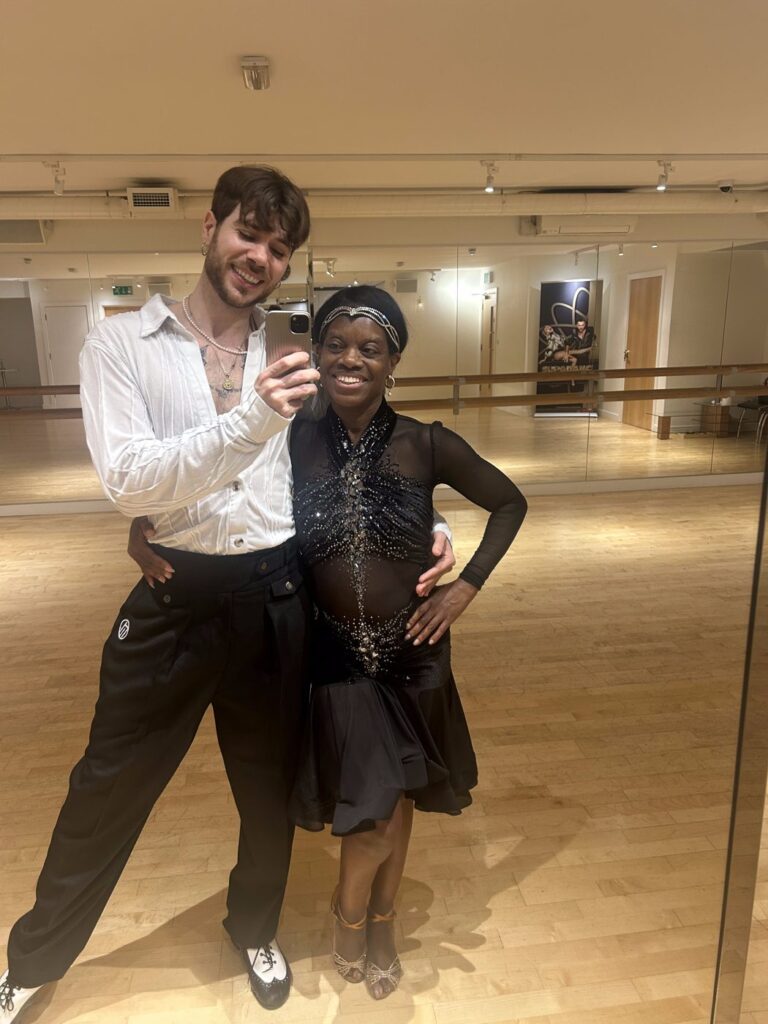
Competition dress is part of the fun. Ballroom calls for a gown that moves, Latin for something shorter and brighter, and gentlemen wear tailored trousers with a shirt or a tail suit depending on the level. At Bronze level many events ask for simpler outfits, which keeps things easy for a first outing.
You don’t have to buy a dress. Many dancers hire one or buy second-hand. Hair is worn neat and off the face, and proper dance shoes matter more than anything else you put on. Your professional will guide you through all of it.
What the day is like
Arrive early. You’ll collect your number, find the changing area and have time to warm up. Your professional will walk the floor with you so you know where you’re starting.
Events run in “heats”. Your heat is called, you walk on together, and you dance for around a minute and a half alongside several other couples. The judges stand around the edge of the floor. Then you walk off, catch your breath and wait for the next one.
Between heats there’s time to watch, cheer for other students and enjoy the atmosphere. Results are usually announced through the day, and yes, there are medals and trophies.
Most people come off the floor after their first heat smiling and asking when they can go again.
Nerves are normal
Everyone is nervous the first time. A few things help:
- Remember that your professional has done this hundreds of times and will look after you.
- Breathe out slowly before you walk on.
- Smile. It relaxes your shoulders and the judges notice it.
- If you make a mistake, keep going. Nobody stops, and most of the time nobody sees.
The audience at a Pro-Am event is one of the warmest you’ll ever dance in front of. Almost everyone there is a dancer, a teacher or a friend of one.
Where can I compete?
London has several Pro-Am events through the year. The Ice Ball takes place on 28 November 2026 at Chelsea Old Town Hall on the King’s Road, and is known as a friendly, boutique competition. The London Ball is held each October, and The Westminster Ball follows in January.
Further afield, the Blackpool Dance Festival each May is the most famous ballroom event in the world and has its own Pro-Am events. The UK Open in Bournemouth each January and the International Championships in London each October are the other great dates of the British calendar. And if you fancy combining dancing with travel, there is a Pro-Am competition somewhere in the world almost every week.
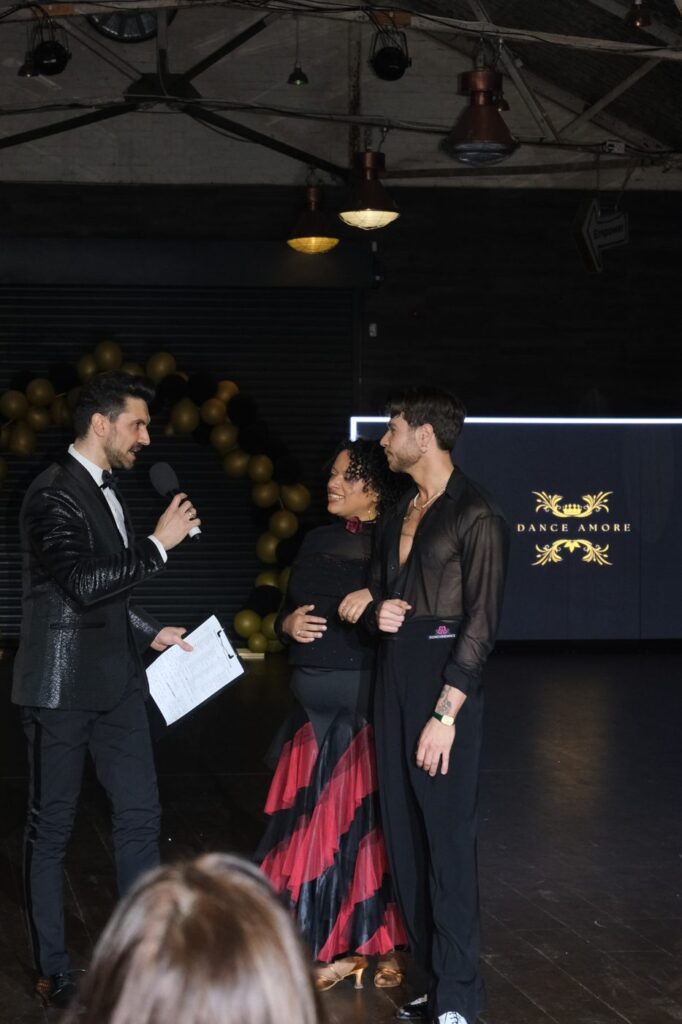
Not ready to be judged? A showcase is a lovely first step. You perform a routine for an audience with no marks at all. Dance Amore holds its own student showcases in London.
How to start
Every competitor started with one lesson. At Dance Amore you’ll train one to one with a professional who has competed and performed at the highest level, and who will only suggest a competition when you’re ready for it.
Read more about Pro-Am ballroom and Latin at Dance Amore, or get in touch to book an intro lesson and consultation. Then see how Pro-Am works with us from your very first lesson.